Oribit Health


The healthcare landscape is transforming at unprecedented speed. In 2026, digital health is no longer an optional enhancement, it has become the foundational layer through which care is delivered, experienced, and improved. From AI-powered diagnostics to integrated virtual care ecosystems, technology is reshaping healthcare systems and redefining expectations for access, quality, and outcomes.

At Orbit Health, we view this transformation not simply as a technological shift, but as a responsibility to lead, ensuring that innovation remains ethical, inclusive, and firmly centered on people.

Below, we share Orbit Health’s perspective on the key digital health trends shaping healthcare in 2026 and how they are redefining patient care.


Artificial Intelligence: From Assistive Tool to Essential Partner

Artificial Intelligence has moved beyond experimentation to become an essential component of modern healthcare systems. In 2026, generative AI accelerates drug discovery, supports clinical decision making, predicts patient outcomes, and automates administrative processes that once consumed valuable clinical time. Deep-learning models now assist in medical imaging analysis, while intelligent AI agents help guide patients through personalized care pathways.

We see AI as a powerful enabler, one that reduces clinician burnout, unlocks insights from complex health data, and restores focus to the human side of care. When responsibly designed and governed, AI strengthens both efficiency and empathy in healthcare delivery.

Virtual Care: Building a Hybrid Health Ecosystem

Telemedicine was only the beginning. Today, healthcare is evolving into fully integrated hybrid models that combine physical facilities with virtual hospitals and remote care platforms. Patients receive continuous care from their homes through automated reminders, virtual follow-ups, and real-time monitoring, coordinated through unified clinical dashboards.

What This Means for Patients:

/Hybrid care reduces unnecessary hospital visits, improves access to specialists, lowers costs, and ensures continuity of care. We believe hybrid care models are essential to expanding access, particularly for underserved communities and to closing long-standing gaps across the healthcare continuum.

Wearables and Remote Monitoring: Enabling Proactive Health

Connected health devices are shifting healthcare from reactive intervention to proactive management. Wearables such as smartwatches, ECG patches, and biosensors now provide continuous data on heart rhythm, glucose levels, and blood oxygen empowering clinicians and patients with real-time, actionable insights.

Why It Matters:

Continuous monitoring enables earlier intervention, transforms chronic disease management, and significantly reduces avoidable hospital admissions.
We see remote monitoring as a cornerstone of future healthcare—supporting prevention, long-term management, and improved patient outcomes.

Personalized Medicine: Care Designed Around the Individual

Healthcare in 2026 is increasingly personalized. By integrating genomics, lifestyle data, diagnostic imaging, and real-time metrics from connected devices, care teams can tailor treatment plans to each individual patients ensuring the right intervention at the right time.

Personalized medicine improves treatment effectiveness, minimizes side effects, and strengthens patient adherence particularly in complex conditions such as cancer, autoimmune disorders, and chronic illnesses. We believe personalization is no longer a luxury, but a standard of quality care.

Cybersecurity and Interoperability: Trust as the Digital Foundation

As digital health ecosystems expand, so does the responsibility to protect patient data and ensure seamless information exchange. In 2026, cybersecurity and interoperability are no longer optional they are the foundation upon which trust, safety, and system efficiency are built. We believe secure, interoperable platforms are essential to scalable digital health. Trust is not an add-on; it is the backbone of sustainable innovation.

Robotics and Immersive Technologies: Precision and Experience

AI-enhanced robotics are improving surgical precision, optimizing logistics, and supporting patient mobility. At the same time, augmented and virtual reality technologies are being used in clinical training, pain management, rehabilitation, and mental health care.


Looking Ahead:

These technologies enhance accuracy, reduce risk, improve operational efficiency, and create more engaging patient experiences.
We see immersive technologies as tools that elevate both clinical outcomes and human connection.

Digital Therapeutics: Extending Care Beyond the Clinic

Clinically validated digital therapeutics are becoming a standard component of care for chronic and behavioral health conditions. Delivered through mobile applications, these solutions empower patients to manage conditions such as diabetes, hypertension, and anxiety as part of their daily lives.

Digital therapeutics increase patient engagement, reduce long-term care costs, and extend the reach of healthcare beyond traditional clinical settings. We see strong potential in integrating these solutions into holistic care ecosystems.

Leading the Way: Orbit Health’s Path Forward

This moment represents more than incremental progress—it marks a defining shift in how healthcare systems operate and evolve. Digital health is now woven into the fabric of care delivery.

At Orbit Health, our path forward is clear:

  • Expanding virtual and hybrid care models to meet patients where they are.
  • Harnessing AI and data analytics to personalize care at every stage.
  • Building secure, interoperable systems that earn and sustain trust.
  • Partnering with wearable and digital therapeutics platforms to create holistic ecosystems.
  • Empowering patients and clinicians with tools that enable proactive health management.

In a world where technology is reshaping healthcare expectations, the organizations that innovate thoughtfully, ethically, and patient-centrically will not merely adapt to the future they will define it.

At Orbit Health, we are committed to shaping a healthier, more connected future together.


Orbit Health is dedicated to building secure, inclusive, and patient-centered digital health systems that improve access, quality, and outcomes. Through responsible innovation and strategic partnerships, we are shaping the future of healthcare delivery.
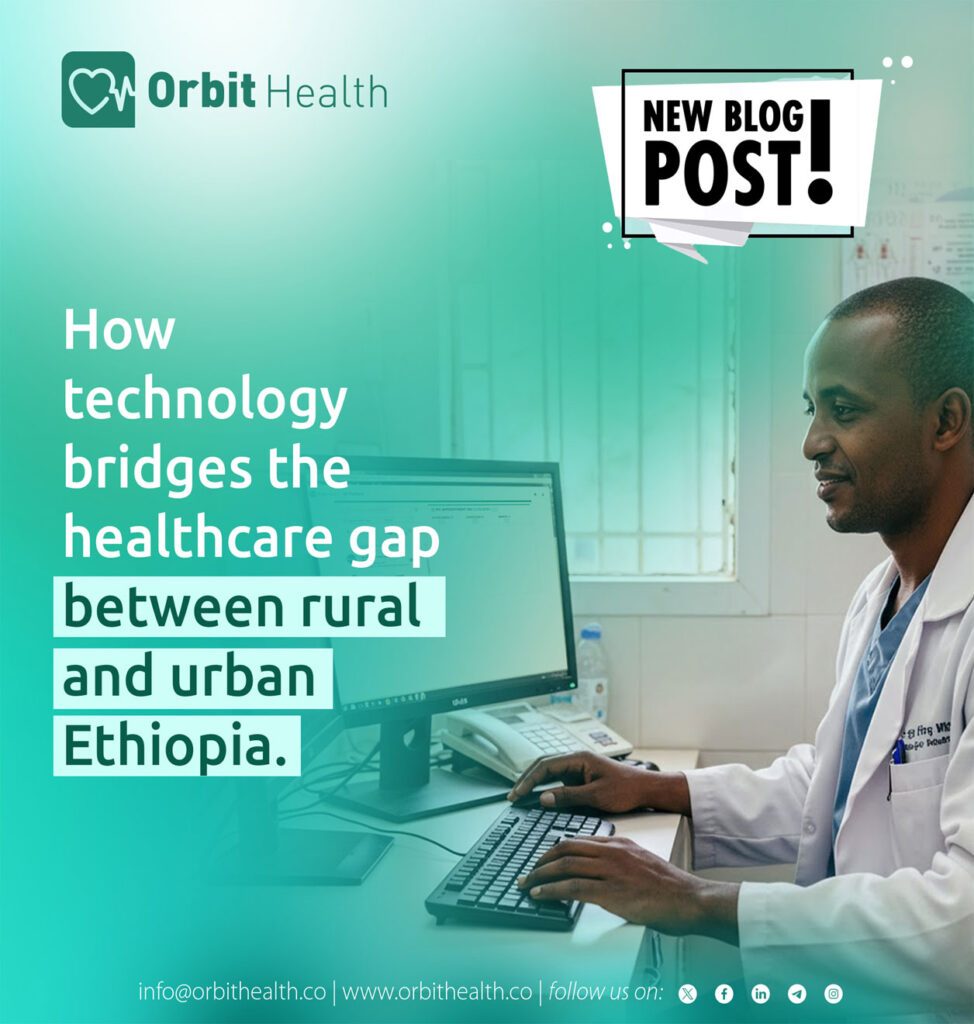
Bridging the Divide: How Technology is Revolutionizing Healthcare Access in Rural Ethiopia

For decades, the map of Ethiopia’s healthcare access has been a tale of two realities. In urban centers like Addis Ababa, hospitals buzz with specialists and advanced equipment. Meanwhile, in vast rural regions home to the majority of the population, quality healthcare has often been a distant dream, separated by rugged terrain, a scarcity of doctors, and limited infrastructure.

This urban-rural health divide has had profound consequences. But today, a powerful force is beginning to redraw this map: digital technology. From smartphones to satellites, a wave of innovation is creating a new, more equitable healthcare landscape.

The Core of the Challenge

The gap is not just about distance. It’s a compound problem of:

Human Resources: A critical shortage of doctors and specialists in rural areas.

Infrastructure: Limited clinics, unreliable electricity, and poor road networks.

Information Silos: Paper-based records that can’t be easily shared or analyzed, leading to fragmented care.

How Technology is Building the Bridge

Telemedicine: Bringing the Doctor to the Patient

The most direct bridge is telemedicine. Using simple video conferencing on smartphones or laptops, health officers in remote clinics can now consult with specialists in Urban areas. This eliminates the need for costly and arduous journeys for patients who need expert opinions. A mother in a Somali village can have her child’s rash examined by a dermatologist hundreds of kilometers away, ensuring timely and accurate diagnosis.

Mobile Health (mHealth) for Proactive Care

Community Health Workers (CHWs), the backbone of rural primary care, are being empowered with mobile apps. These tools guide them through patient assessments, send reminders for prenatal checkups or vaccinations, and allow them to collect and transmit vital health data in real-time. This turns their phones into portable clinics, enabling proactive, data-driven community health outreach and epidemic surveillance.

Electronic Health Records (EHRs): Creating a Continuum of Care

Companies like Orbit Health are at the forefront of digitizing medical records. An EHR system means a patient’s health history is no longer locked in a single, paper file in a distant health post. When that patient is referred to a district hospital, and based on their willingness their records; allergies, medications, past treatments can be accessed instantly. This ensures continuity of care, reduces medical errors, and provides a comprehensive health picture that is crucial for effective treatment, no matter where care is received.

The Road Ahead: Challenges and Opportunities

The journey is not without its hurdles. Reliable internet connectivity, digital literacy, and sustainable funding are ongoing challenges. However, the progress is undeniable. The synergy between technology companies, government initiatives, and global health partners is creating a resilient ecosystem.

Crucially, homegrown Ethiopian tech companies are leading the charge. Their understanding of the local context, language, and specific challenges ensures that the solutions developed are not just imported, but are built for and by Ethiopians.

A Healthier, More Connected Future

Technology is not a silver bullet, but it is the most powerful lever we have to accelerate health equity. It is transforming isolation into connectivity and scarcity into access. By continuing to invest in and scale these digital solutions, Ethiopia is not just bridging a gap, it is building a unified, resilient, and patient-centered healthcare system for all its citizens, no matter their postcode.

The future of Ethiopian healthcare is digital, and it promises a nation where your location no longer determines your right to a healthy life.
A Healthy Society is a Productive Society!

More than a digital chart—it's the heartbeat of your clinic.

In the heart of a busy clinic, the integrity of a single patient record is everything. It holds the history, the diagnoses, the treatments, and the trust between a caregiver and their patient. Since 2016, Orbit Health has been dedicated to strengthening this backbone of healthcare in Ethiopia by moving from error-prone paper charts to intelligent, and secured digital systems.

Our core clinical solution is a robust Electronic Medical Record (EMR) system, the digital heartbeat of a modern medical practice.

What is the Orbit Health EMR?

More Than a Digital Chart,

An EMR is a digital version of the classic paper chart found in a single clinic. But at Orbit Health, we’ve built ours to be so much more. It’s a powerful tool designed to streamline the daily workflow of receptions, doctors, nurses, laboratory technicians, cashiers and all administrators, while placing the patient at the center of care.

Key features of our EMR include:

  • Comprehensive Clinical Documentation: Replace illegible handwriting with intuitive, structured digital records. Track patient medical history, vital signs, Imaging results, diagnoses, medications, and immunization dates with ease.
  • Evidence-Based Decision Support: Even though our EMR is capable of helping almost all the hospital staff, it’s mainly designed to support clinicians. With clear records and data trends at their fingertips, healthcare providers can make more informed, evidence-based decisions for each patient.
  • Ensuring Continuity of Care: Even within a single facility, patients see multiple providers. Our EMR ensures that every authorized member of the care team is on the same page, creating a continuous and cohesive patient journey without gaps or repetition.

The Orbit Health Difference: An EMR That Connects

While our EMR excels as a standalone clinical chart, its true power is unleashed through integration with Orbit Health’s other specialized systems.

  • Seamless Integration with Drug Management: This is where we go beyond a basic EMR. When a doctor prescribes a medication in the EMR, the system communicates directly with our Drug Management System. This checks for real-time stock levels, manages inventory, and handles the financial tracking all from a single point of entry. This integration prevents prescriptions for unavailable drugs and optimizes a facility’s entire supply chain.
  • Streamlined Administrative Work: Our EMR reduces the administrative burden by integrating key administrative functions, allowing staff to spend less time on paperwork and more time on patient care.

Built on a Mission of Transformation

Our technology is guided by our core values:

  • Patient-Centricity: We built our EMR to make the clinician’s job easier, so they can in turn become better caregivers for their patients’ expectations and demands.
  • Innovation: As an Ethiopian company, we understand the local challenges and have innovated to create a solution that is both advanced and perfectly adapted to the market.
  • Empowering Healthcare Providers: We give providers the tools they need to deliver exceptional care, efficiently and effectively.

The Bigger Picture: The Orbit Innovation Hub

Our commitment to digital health doesn’t stop at our own products. Through the Orbit Innovation Hub (OIH), we are fostering the next wave of Ethiopian tech innovators. By supporting startups, we help build a stronger digital ecosystem that will continue to advance healthcare and other sectors for years to come.

The Bottom Line for Your Facility

Choosing the Orbit Health EMR means choosing a system that is:

  • Accessible & Functional: Designed to make your daily operations seamless.
  • Clinically Powerful: Built to support, not hinder, medical professionals.
  • Part of a Cohesive Ecosystem: Ready to connect with other critical systems for unmatched efficiency.

It’s the essential first step in the digital transformation of any healthcare facility, laying the clinical foundation for a healthier future.

Let’s build the future of healthcare together.

 Contact us: info@orbithealth.co
 Learn more: www.orbithealth.co

A few years ago, walking into many hospitals and clinics across Ethiopia meant facing long queues, overburdened staff, misplaced records, and patients waiting hours, sometimes days for results or follow-ups. Care was present, yes, but it was trapped in folders, lost in paperwork, or delayed by inefficiencies.This was the reality we set out to change.

At Orbit Health, we believe that access to quality healthcare isn’t just a goal, it’s a right, and one that can be amplified by technology. Our mission is bold yet simple: digitize healthcare to improve lives. And today, we are proud to say, that mission is becoming a movement.

From the heart of Addis Ababa to hospitals in Butajira, Adama, and Dire Dawa, we’ve partnered with over 50 health facilities, transforming the way they deliver care. Our work spans both public and private institutions,places like:

  • St. Peter Comprehensive Specialized Hospital
  • Adama General Hospital & Medical College
  • Nordic Medical Center
  • Sabian General Hospital, and dozens more.These facilities didn’t just “go digital.” They evolved.

📊 What Happens When You Go Digital?

Let’s take a look at Sabian General Hospital. Before using Orbit’s EMR system, patients waited an average of 71 minutes to see a doctor. Today, that wait has been cut almost in half,down to just 36 minutes.Their outpatient visits? Up by 35%, from 14,000 to 19,000 a month. Emergency visits? Up 67%, thanks to faster triaging, 98% of ER patients are now triaged within 5 minutes.

This isn’t just about numbers. It’s about nurses spending less time on paperwork, and more time with patients. It’s about doctors having full medical histories at their fingertips, and patients no longer needing to carry handwritten cards to every appointment.

Digitization is only powerful when it’s people-centered. That’s why we go beyond implementation. Orbit Health is:

  • Building telemedicine tools that work within the EMR
  • Integrating with national systems like DHIS2, insurance platforms, and lab systems
  • Exploring AI integration for faster, smarter clinical decisions
  • Providing 24/7 support to every facility we serve

And we’re not just building systems, we’re building capacity. Through free webinars with CEUs, Orbit is improving digital literacy for healthcare professionals across Ethiopia. We’ve already trained over 4,800 professionals, ensuring that digitization goes hand-in-hand with human development.

We’re proud of our operational work, but also of the evidence that backs it. In a systematic review and meta-analysis conducted with JSI under the USAID Digital Health Activity, we found that mature digital health systems can reduce patient mortality by 3–7%. That’s not theory, that’s lives saved.

🌍 Our Footprint

With a presence across all Ethiopian regions from Oromia to Amhara, Tigray to Sidama, Addis Ababa to Harari, Orbit Health is embedded in Ethiopia’s health landscape.

So far, we’ve supported:

  • 4.6M+ appointments scheduled
  • 7M+ medications dispensed
  • 4.2M+ patient records migrated
  • 300,000+ system users and growing

Digitization isn’t just a trend in Ethiopia’s health sector,it’s becoming the backbone of care. Orbit Health is proud to be at the center of this transformation, helping hospitals run better, helping professionals thrive, and helping patients experience the care they deserve.

Let’s build the future of healthcare together.

📨 Contact us: info@orbithealth.co
🌐 Learn more: www.orbithealth.co


#DigitalHealth #OrbitHealth #EMR #HealthTechEthiopia #AIinHealthcare #Telemedicine #HealthcareInnovation #PublicHealth 

🧠💊 Data Is the New Vitamin: Why Your Health App May Be as Important as Your Diet


AI in Healthcare: The Future is Now!

We live in an era where AI is shaping everything around us—ChatGPT is handling conversations, DeepSeek is pushing research boundaries, and AI-powered robots are making our homes smarter. But what about healthcare? With hospitals embracing digitization and EMRs streamlining patient care, integrating AI into the mix isn’t just an option—it’s the future!

The AI-Powered Healthcare Revolution

Imagine a world where AI can predict diseases before they even show symptoms. Sounds like sci-fi, right? Well, it’s happening! AI algorithms can now detect cancers earlier than traditional methods, assist in diagnosing rare diseases, and even personalize treatment plans based on a patient’s genetic makeup.

Why AI + EMR = A Game Changer

Electronic Medical Records (EMRs) have already made healthcare more efficient, but AI takes it to the next level. Here’s how:

  • Smart Predictions 📊 – AI analyzes patient data to predict potential health risks, helping doctors take proactive measures.
  • Faster Diagnoses ⚡ – No more endless waiting for results! AI speeds up lab work and imaging analysis, leading to quicker treatments.
  • Virtual Assistants 🤖 – AI-powered chatbots and virtual assistants can help answer patient questions, schedule appointments, and even remind them to take their meds.
  • Reducing Doctor Burnout 🏥 – Automated documentation and voice recognition tech help doctors spend less time on paperwork and more time with patients.

AI in Healthcare: Mind-Blowing Facts

🔹 AI can analyze medical images 1,000 times faster than a human radiologist. 🔹 A study showed that AI detected breast cancer 5 years before it was visible on traditional scans. 🔹 AI-powered robotic surgeons can perform procedures with precision levels beyond human capability!

The Future is Bright (and AI-Powered!)

From diagnosing diseases to assisting in surgeries, AI is not here to replace doctors but to empower them. With EMRs evolving and AI stepping in, healthcare is becoming smarter, faster, and more accessible.

At Orbit Health, we recognize this transformation and are actively working to integrate AI into the Ethiopian healthcare system. Our mission is to bring the next level of smart healthcare solutions to hospitals and clinics, ensuring that AI-powered innovation benefits both medical professionals and patients alike. The future of healthcare in Ethiopia is unfolding, and we’re committed to making it a reality! 🚀

Are we ready to let AI help shape the future of medicine? The answer is a resounding YES! 🚀

As Ethiopia’s healthcare system begins embracing digital transformation, one of the biggest barriers isn’t hardware or internet access—it’s the human element. Despite the clear benefits of digital health tools like electronic health records and automated reporting, many healthcare workers face challenges using them effectively. From low digital literacy to deep-rooted resistance to change, end-user adoption remains a major hurdle that must be addressed to realize the full potential of digital health in Ethiopia.

In many facilities, staff are introduced to new digital systems without enough training or ongoing support. Imagine a health officer in a remote district clinic, suddenly expected to replace her/his handwritten logbooks with a digital patient management system. With limited computer skills, no prior experience, and often unreliable internet, the technology quickly becomes a source of stress rather than a tool for better care. This leads to frustration, errors, and sometimes a complete rejection of the new system.

To overcome this resistance, digital health implementation must be community-driven, not top-down. Solutions must be designed with end users in mind featuring intuitive interfaces, local language support, and workflows that mirror what clinicians are already used to. But even the most user-friendly platform cannot succeed without investment in continuous digital capacity-building. Short workshops won’t cut it; Ethiopia’s health workforce needs ongoing coaching, mentorship, and refresher sessions, ideally embedded into routine supervision and professional development.

Another way forward is to cultivate local champions, health workers who adopt the system early and can inspire and train others. Peer-to-peer learning often has a more lasting impact than external instruction. Leadership at the facility and regional levels also matters. When digital tools are endorsed by managers and integrated into performance metrics and reporting expectations, adoption rates significantly improve.

Importantly, tackling these challenges also requires addressing structural issues: ensuring reliable electricity, access to devices, and sustainable tech support. If systems frequently crash or require constant troubleshooting, users will quickly lose trust, regardless of how innovative the technology might be.

Digital health holds incredible promise for transforming Ethiopia’s healthcare system. But we must remember technology only works when people are ready to use it. By investing in digital literacy, behavioral change, and user-centered design, we can ensure that every health worker not just the tech-savvy few benefits from the digital future.

Read More on Our LinkedIn Page!!

The Benefits of Big Data in Healthcare


AI in Healthcare: The Future is Now!

We live in an era where AI is shaping everything around us—ChatGPT is handling conversations, DeepSeek is pushing research boundaries, and AI-powered robots are making our homes smarter. But what about healthcare? With hospitals embracing digitization and EMRs streamlining patient care, integrating AI into the mix isn’t just an option—it’s the future!

The AI-Powered Healthcare Revolution

Imagine a world where AI can predict diseases before they even show symptoms. Sounds like sci-fi, right? Well, it’s happening! AI algorithms can now detect cancers earlier than traditional methods, assist in diagnosing rare diseases, and even personalize treatment plans based on a patient’s genetic makeup.

Why AI + EMR = A Game Changer

Electronic Medical Records (EMRs) have already made healthcare more efficient, but AI takes it to the next level. Here’s how:

  • Smart Predictions 📊 – AI analyzes patient data to predict potential health risks, helping doctors take proactive measures.
  • Faster Diagnoses ⚡ – No more endless waiting for results! AI speeds up lab work and imaging analysis, leading to quicker treatments.
  • Virtual Assistants 🤖 – AI-powered chatbots and virtual assistants can help answer patient questions, schedule appointments, and even remind them to take their meds.
  • Reducing Doctor Burnout 🏥 – Automated documentation and voice recognition tech help doctors spend less time on paperwork and more time with patients.

AI in Healthcare: Mind-Blowing Facts

🔹 AI can analyze medical images 1,000 times faster than a human radiologist. 🔹 A study showed that AI detected breast cancer 5 years before it was visible on traditional scans. 🔹 AI-powered robotic surgeons can perform procedures with precision levels beyond human capability!

The Future is Bright (and AI-Powered!)

From diagnosing diseases to assisting in surgeries, AI is not here to replace doctors but to empower them. With EMRs evolving and AI stepping in, healthcare is becoming smarter, faster, and more accessible.

At Orbit Health, we recognize this transformation and are actively working to integrate AI into the Ethiopian healthcare system. Our mission is to bring the next level of smart healthcare solutions to hospitals and clinics, ensuring that AI-powered innovation benefits both medical professionals and patients alike. The future of healthcare in Ethiopia is unfolding, and we’re committed to making it a reality! 🚀

Are we ready to let AI help shape the future of medicine? The answer is a resounding YES! 🚀

In today’s fast-paced world, where technology touches nearly every aspect of our lives, healthcare is no exception. Telemedicine, the practice of delivering healthcare remotely through digital platforms, has emerged as a game-changer in the medical field. It’s more than just a convenience; it’s a lifeline for millions seeking timely and efficient care.

The Rise of Telemedicine

Telemedicine has been gaining traction for years, but the COVID-19 pandemic accelerated its adoption on an unprecedented scale. When in-person visits became challenging, telemedicine provided a safe and effective alternative, bridging the gap between patients and healthcare providers. Today, it’s not just a temporary solution; it’s a cornerstone of modern healthcare.

Benefits of Telemedicine

  • Accessibility: Telemedicine breaks down geographical barriers, allowing patients in remote or underserved areas to access high-quality care. With just a smartphone or computer, individuals can consult with specialists who may be hundreds of miles away.

  • Convenience: For busy individuals or those with mobility challenges, telemedicine offers unparalleled convenience. No more long commutes or waiting rooms—appointments can be scheduled and conducted from the comfort of home.

  • Cost-Effective: Virtual consultations often cost less than traditional in-person visits. Additionally, telemedicine reduces associated expenses like travel and childcare.

  • Continuous Care: Chronic disease management benefits immensely from telemedicine. Regular check-ins, remote monitoring, and digital health tools enable proactive management of conditions such as diabetes, hypertension, and mental health disorders.

How Telemedicine Works

Telemedicine encompasses a range of services, including:

  • Video Consultations: Real-time face-to-face interactions with doctors and specialists.
  • Remote Monitoring: Devices that track vital signs, glucose levels, or heart rates send data directly to healthcare providers.
  • e-Prescriptions: Doctors can prescribe medications digitally, streamlining the process for patients.
  • Health Apps and Portals: Patients can schedule appointments, view test results, and communicate with their care team.

Telemedicine vs. Artificial Intelligence (AI)

Telemedicine, the practice of providing healthcare remotely using technology, has transformed access to medical services. However, Artificial Intelligence (AI) is taking telemedicine a step further, unlocking a range of benefits that enhance both the patient and provider experience.

While telemedicine focuses on connecting patients with healthcare professionals through digital platforms, AI empowers this connection with advanced tools that analyze data, predict outcomes, and suggest optimized treatments. For instance, AI can:

  • Assist in diagnosing diseases based on medical imaging or patient symptoms.
  • Provide real-time data insights through wearable health devices.
  • Offer predictive analytics to foresee potential health risks.

Together, telemedicine and AI are reshaping healthcare delivery by merging accessibility with precision and innovation.

The Future of Telemedicine

As technology advances, so does the potential of telemedicine. Innovations such as artificial intelligence, wearable devices, and augmented reality are poised to make virtual care even more personalized and effective. For instance, AI-powered chatbots can assist in preliminary diagnosis, while wearable devices provide real-time health data to doctors.

The future of telehealth will also see AI playing a critical role in the development of personalized medicine. AI systems will analyze vast amounts of data, including genetic information, lifestyle factors, and patient history, to create highly individualized treatment plans. By leveraging this capability, healthcare providers can offer tailored interventions that address unique patient needs, improving outcomes and patient satisfaction.

Telemedicine is not just a trend—it’s the future of healthcare. By making care accessible, affordable, and patient-centered, telemedicine is transforming lives and revolutionizing the way we approach health and wellness

Orbit Health is proud to be at the forefront of this digital health revolution. As a digital health company, we are committed to harnessing the power of telemedicine to ensure better health outcomes for everyone. Whether it’s through innovative tools, personalized care, or education, we’re here to support your wellness journey—anytime, anywhere.

The Benefits of Cloud-Based EMR: Transforming Healthcare for Small to Medium Practices

In today’s fast-paced healthcare environment, efficiency and accessibility are paramount. Cloud-based Electronic Medical Records (EMR) systems have emerged as a powerful solution, allowing medical practices to store and manage patient data on remote servers accessible via the internet. For small to medium-sized medical practices, these web-based EHR systems are quickly becoming the preferred choice for meeting clinical needs.

Cloud-Based EHR vs. Client-Server Systems

EHR systems generally fall into two categories: cloud-based and client-server.

  • Cloud-Based EHR: In this model, patient data is stored on external servers and can be accessed from anywhere with an internet connection. This setup requires only a computer and internet access, making it convenient for healthcare providers.
  • Client-Server Systems: These systems store data in-house, requiring significant investment in server hardware and software installed within the physician’s office. While traditional, this approach is increasingly being overshadowed by the advantages of cloud-based solutions.

Why Practices Are Choosing Cloud-Based EHR

1. Simplified Implementation

Cloud-based EHR systems offer a straightforward implementation process. Since the software runs on the web, there’s no need for extensive hardware or software installation, allowing practices to get up and running quickly.

2. Cost Savings

One of the primary barriers for small medical practices is the initial cost of EHR installation. Client-server systems often incur high setup costs along with ongoing licensing fees, maintenance, and updates. In contrast, cloud-based EHR requires minimal initial investment. Practices typically pay a monthly fee, similar to a utility bill, as part of a software as a service (SaaS) arrangement.

3. Reduced IT Resource Requirements

Moving to the cloud significantly decreases the need for in-house IT resources. Practices no longer need a dedicated team to manage hardware and software; this is handled by the SaaS provider. Automatic updates ensure practices always operate on the latest software version, enhancing efficiency without the extra workload.

4. Enhanced Accessibility and Collaboration

With cloud-based software, users can securely log in from anywhere with an internet connection. This feature fosters better collaboration among physicians, staff, and patients, leading to improved continuity of care. It allows healthcare professionals to access critical information outside the office, enhancing overall patient management.

5. Simplified Scalability

Cloud-based systems make it easy for small practices to expand. Adding new users, doctors, or locations can be done with minimal disruption and cost, allowing practices to grow without the typical IT challenges associated with expansion.

Are Web-Based EHR Systems Safe?

Concerns about security are common when considering any digital solution. However, web-based EHR systems can offer superior security compared to client-server systems and paper records.

  • HIPAA Compliance: Cloud-based systems achieve compliance through data centers with bank-level security and high-level encryption, rendering data unreadable even in the event of a security breach.
  • Backup and Disaster Recovery: Unlike client-server records, which can be vulnerable during transport to storage, cloud data is backed up securely in multiple locations. This ensures that records are safe from natural disasters or fires.

The shift to cloud-based EMR systems represents a significant advancement in healthcare technology. By offering cost savings, ease of implementation, and enhanced accessibility, these solutions are well-suited for small to medium-sized medical practices looking to improve their operations.

In line with this transformation, Orbit Health is excited to launch its groundbreaking cloud-based EMR service, dedicated to providing a seamless paperless journey for all healthcare facilities. This initiative is part of our mission to enhance patient care and streamline healthcare delivery in a rapidly evolving landscape. Embracing cloud-based EMR is not just about keeping up with technology, it’s about empowering healthcare providers and patients alike for a better future.

Read the update on LinkedIn

Celebrating World Children’s Day: Advocating for Digital Health for Every Child

Every year on November 20, the world comes together to celebrate World Children’s Day, a day dedicated to promoting the rights and well-being of children everywhere. As we reflect on the importance of this day, it’s essential to consider how advancements in digital health, particularly Electronic Medical Records (EMR), can significantly impact the health and development of children globally.

The Importance of Digital Health for Children

In today’s digital age, leveraging technology in healthcare is essential, especially for children. Digital health encompasses a variety of tools, including telemedicine, mobile health applications, and Electronic Medical Records (EMR). Here’s how these innovations can make a significant impact:

  1. Access to Care
    Digital health solutions help bridge the gap between children and healthcare services. Telemedicine allows for remote consultations, ensuring that children in rural or underserved areas can access medical expertise without the need for extensive travel.
  2. Early Diagnosis and Intervention
    Mobile health applications can facilitate early detection of health issues through regular monitoring and timely alerts for vaccinations and check-ups. Early intervention can dramatically improve health outcomes for children.
  3. Parental Engagement
    Digital health tools empower parents with easy access to their children’s health information. Parent portals in EMR systems allow caregivers to track immunizations, manage appointments, and communicate with healthcare providers, enhancing their involvement in their child’s health journey.
  4. Mental Health Support
    With the rising concern for children’s mental health, digital platforms can provide vital resources and support. Apps and online counseling can offer children and adolescents the help they need in a format that feels comfortable and accessible.
  5. Health Education
    Digital health initiatives can play a crucial role in educating children about health and wellness. Interactive apps and educational videos can promote healthy habits, nutrition, and the importance of physical activity, encouraging a proactive approach to health from a young age.

A Call to Action

As we celebrate World Children’s Day, it’s crucial to advocate for the integration of digital health solutions in pediatric care. Here are a few ways we can contribute:

  • Support Digital Health Initiatives: Encourage investments in technology that improves healthcare access for children.
  • Raise Awareness: Share information about the benefits of digital health with families and communities.
  • Advocate for Policy Change: Work towards policies that ensure equitable access to digital health resources for all children, regardless of socio-economic status.

On this World Children’s Day, let us advocate for the integration of digital health solutions like Electronic Medical Records into pediatric care. By embracing these technologies, we can enhance the health and well-being of children worldwide, ensuring that they have the opportunity to thrive in a safe and supportive environment. Together, we can work towards a healthier future for our youngest generation.

Scroll to Top